
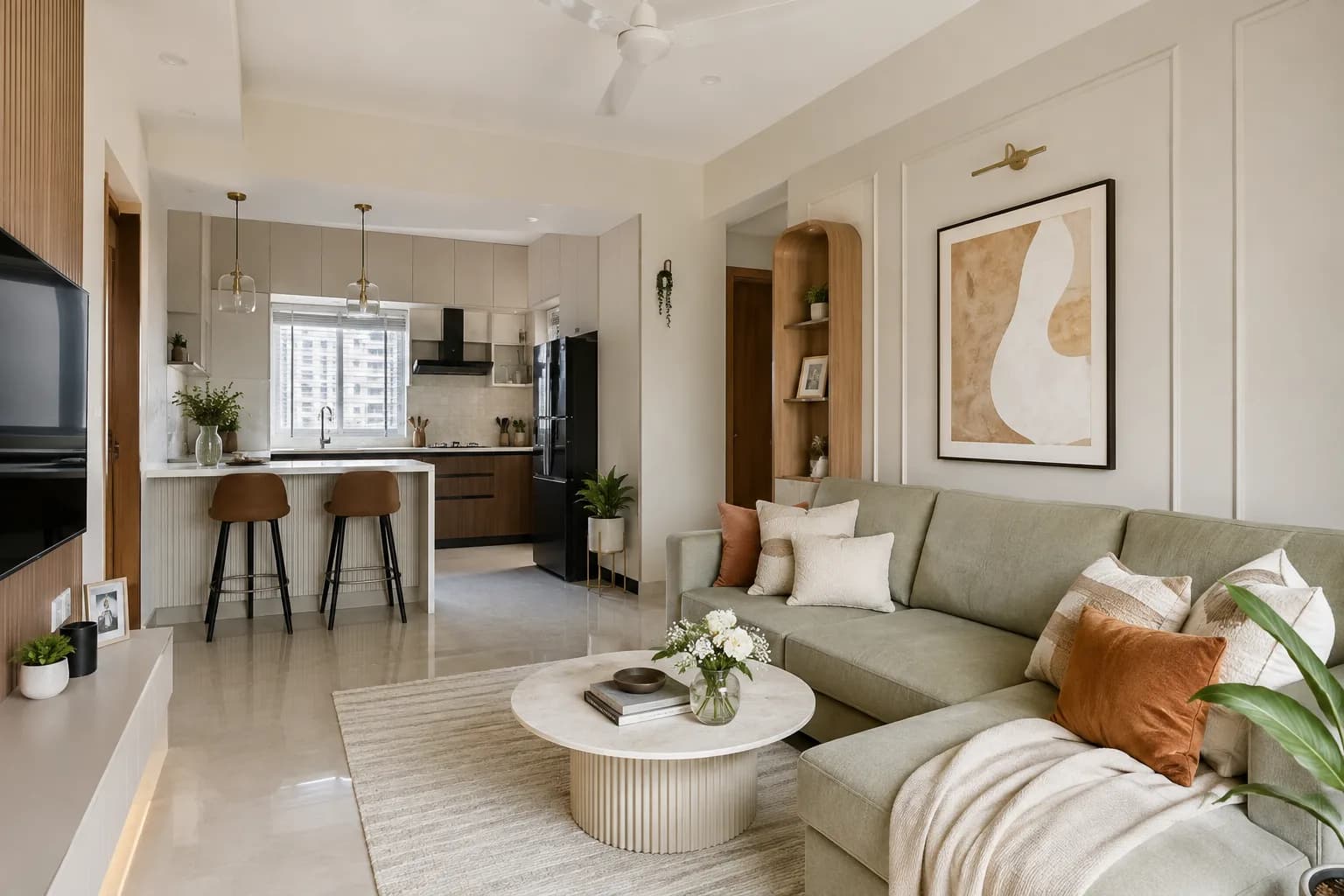
Every January, someone declares minimalism dead and maximalism the future, and every January, most homes stay exactly the same beige they've always been. Trends move faster in headlines than they do in actual living rooms, which is exactly why it's worth separating the current home decor trends genuinely worth adopting from the ones that will look dated by the time your project is finished.
2026 has a clear shape to it for modern home interior design across India. Homes are moving away from anything that looks styled for a photograph and toward spaces that feel like someone actually lives there — textured, a little imperfect, built around comfort rather than a showroom template. Here are 20 interior design trends in 2026 genuinely worth knowing before you plan your next home, whether you're after the latest interior design for home renovations or just a few current interior design trends to freshen up a room.
1. Warm Neutrals Replacing Cool Greys
The grey-on-grey wave that dominated the last decade is fading. In its place: warm beiges, creamy whites, and soft taupes that feel inviting rather than clinical. It's the same restraint as minimalism, just with more warmth in the undertone.
2. Curved Furniture and Arches
Sharp angles are softening into curved sofas, arched doorways, and rounded kitchen islands. Executed in materials like microcement or lime plaster, the look reads as architectural rather than decorative — a shift from a fleeting trend to an enduring design language.
3. Layered Lighting Design
A single ceiling light is being replaced by tunable systems, concealed strips, and wall grazers that shift mood through the day. It's less about fixtures looking good and more about a room actually feeling different at 8 am versus 9 pm.
4. Natural and Sustainable Materials
FSC-certified wood, bamboo ply, clay-based paints, and recycled terrazzo are moving from niche to standard. For homeowners, this shows up as less off-gassing, better ageing finishes, and materials that genuinely hold up rather than needing replacement in a few years.
5. Terracotta and Earthy Tone Revival
Terracotta is turning up well beyond flowerpots — on accent walls, floor tiles, tableware, and furniture. Paired with sage, mustard, or coconut brown, it gives a home real warmth without tipping into visual clutter.
6. Multi-Functional, Multi-Mood Rooms
With hybrid work still common, single-purpose rooms are being redesigned to shift: a study pod that folds away, a sofa that becomes a daybed, or a sliding panel that turns one room into two. The goal is flexibility without visual clutter.
7. Japandi Maximalism
A blend of Japanese restraint and Scandinavian warmth, Japandi maximalism keeps palettes neutral but adds richness through oversized ceramics, woven textures, and sculptural pieces. It reads as calm without feeling sterile or empty.
8. Acoustic Design Elements
City noise has pushed acoustic planning into the mainstream: fabric-wrapped walls, cork tiles, upholstered headboards, and slatted wood panels that quietly absorb sound. It's a functional trend as much as an aesthetic one, particularly in dense urban apartments.
9. Grandmillennial Style (Granny Chic, Refreshed)
Floral prints, pleated lampshades, and vintage-inspired upholstery are back, but paired with contemporary silhouettes rather than a full nostalgic overhaul. One statement piece against modern wood or metal finishes is usually enough.
10. Dopamine Décor
A deliberate swing toward joyful, saturated colour — citrus green, sunshine yellow, and vivid cobalt blue used in glassware, rugs, or a single accent wall rather than across an entire room. Small, bright, and easy to update if tastes change later.
11. Smart Kitchens 2.0
Kitchens are getting genuinely intelligent: voice-activated taps, touchless drawers, and appliances that suggest recipes based on what's actually in the fridge. Compact vertical storage and antimicrobial finishes are becoming standard requirements, not luxury upgrades.
12. Artisan and Handcrafted Maximalism
There's a real pull toward homes with cultural depth: block-printed textiles, carved wood panels, brass inlay work, and terracotta pottery. It supports local craftsmanship and gives a home a story that mass-produced pieces simply can't match.
13. Climate-Responsive Design
This matters more in Indian home design than almost anywhere else. Deeper balconies, jaali screens, cross-ventilation planning, and reflective roof coatings are becoming standard requirements rather than afterthoughts, especially given how much energy passive cooling can genuinely save.
14. Biomorphic, Organic-Shaped Furniture
Soft-edged, nature-inspired forms — cloud-like sofas, pebble-shaped tables, wave-edged consoles — are softening the rigidity of modern interiors. They add tactile comfort without overwhelming a room.
15. Transitional Spaces
Balconies, terraces, and half-open rooms are being reimagined as reading corners, micro offices, or plant-filled nooks using folding glass partitions and weather-friendly furniture. In compact Indian apartments, this is often the single highest-value transformation available.
16. Non-White, Colour-Pop Kitchen Cabinets
The all-white kitchen is giving way to sage green, navy, or warm terracotta cabinetry, often on just the island or lower units. It's a small change with a disproportionately large visual impact.
17. Quiet Luxury, Matured
Quiet luxury has moved past plain neutrals into investment-grade pieces: brushed wool, linen blends, and sculptural metal lamps chosen to age well rather than photograph well on day one. It's less about visible spend and more about enduring quality.
18. Personalised Décor over Matching Sets
Overly coordinated furniture sets are fading in favour of pieces that feel collected rather than purchased all at once. A home that looks assembled over time now reads as far more considered and authentic.
19. Mixed Metals, Used Sparingly
Brass, aged brushed steel, and bronze are being combined carefully, rarely exceeding two finishes in one space. High-gloss gold is fading in favour of finishes with tactile texture and subtle patina.
20. Nature Beyond Plants
Bringing the outdoors in is expanding past houseplants into sage and olive-toned palettes, raw stone accents, and landscape-inspired art. It's a quieter, more integrated way of connecting a home to its natural surroundings.
What's Fading Out in 2026
Not every 2025 favourite is carrying forward. All-grey interiors, overly matching furniture sets, high-gloss gold finishes, and showroom-perfect styling are all losing ground to homes that look genuinely lived in. If your current space leans heavily on any of these, it's less about a full redo and more about knowing where to introduce warmth first.
For homeowners planning a full renovation rather than a few updates, the trends worth committing to are the ones with real staying power — natural materials, climate-responsive layouts, and acoustic comfort — over those that photograph well but date within a year. A Spazay designer can walk you through which of these actually suit your home's layout, budget, and lifestyle before a single wall gets touched.